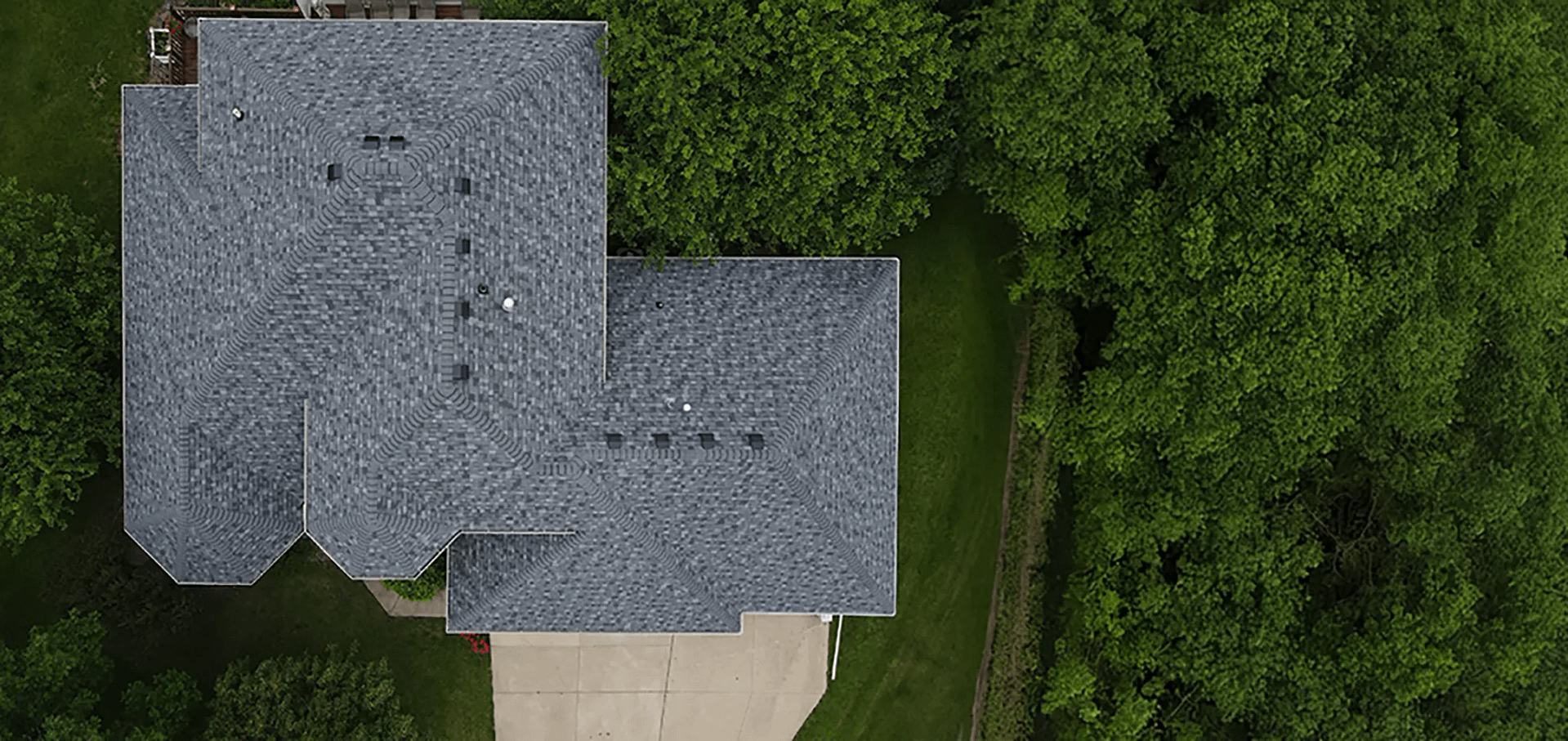
An ice and water shield roof has a critical layer of protection that standard underlayment cannot provide, guarding the most vulnerable parts of your roof against ice dams and leaks. This self-adhering waterproof membrane bonds directly to the roof deck at the eaves, valleys, and penetrations, sealing around nails so water cannot reach the wood even if shingles are damaged or ice backs up. For homeowners in a cold climate like Iowa’s, understanding what ice and water shield is and why it matters is key to protecting your roof and home. Here is what this guide covers:
- What it is: How ice and water shield works and where it is installed.
- Why it matters: The specific ways it protects your roof and home from damage.
- Code and cost: What building codes require and what the protection costs.

What Is Ice and Water Shield?
Ice and water shield is a self-adhering, rubberized asphalt membrane that bonds directly to the roof deck beneath the shingles, creating a fully waterproof barrier. Unlike standard felt or synthetic underlayment, it seals tightly around nails and fasteners, so water that gets past the shingles still cannot reach the wood deck below.
It Is a Self-Adhering Waterproof Membrane
Ice and water shield is a peel-and-stick, polymer-modified bitumen membrane that adheres directly to the roof deck for a watertight seal. Its self-adhering backing bonds to the wood and seals around every nail and fastener driven through it, which standard underlayment cannot do. This creates a true waterproof barrier rather than the water-resistant layer that felt provides. Because it seals around penetrations, water cannot find its way through the fastener holes that hold the shingles. For homes in Lyle and surrounding areas, that complete seal is vital protection against winter moisture.
- Peel-and-stick: Self-adhering backing bonds to the roof deck.
- Seals fasteners: Closes tightly around every nail driven through it.
- Fully waterproof: Creates a true barrier, not just water resistance.
- Beats felt: Standard underlayment only resists water, not seals it.
It Is Installed at the Most Vulnerable Spots
Ice and water shield is installed at the roof’s most leak-prone areas rather than across the entire deck, targeting where water is most likely to get in. It goes at the eaves along the roof’s lower edge, in the valleys where two roof planes meet, around penetrations like chimneys and vents, and at sidewalls. These are the spots where ice dams, gutter backups, and concentrated runoff push water under the shingles. The main field of the roof is covered with standard synthetic or felt underlayment, while the membrane protects the high-risk zones. Targeting these areas is what makes the protection both effective and cost-efficient.
- Eaves: The lower roof edge where ice dams back up water.
- Valleys: Where two roof planes channel heavy runoff.
- Penetrations: Around chimneys, vents, and skylights.
- Targeted use: Protects high-risk zones, not the whole deck.
5 Reasons Ice and Water Shield Matters
Ice and water shield matters because it protects the parts of your roof most likely to leak, preventing the costly water damage that follows. The five reasons below explain why this hidden layer is so important, especially in a cold climate.
1. It Prevents Ice Dam Leaks
The most important reason ice and water shield matters is that it stops the leaks caused by ice dams, a major winter threat in cold climates. When heat escapes into the attic, it melts snow that refreezes at the cold eaves, forming an ice dam that traps meltwater and forces it backward up the roof and under the shingles. Ice and water shield at the eaves creates a waterproof barrier that blocks this backed-up water from reaching the deck. Without it, that water leaks into the attic, ceilings, and walls. For homes in Lyle and surrounding areas, this protection is essential in Iowa’s freeze-thaw winters.
- Ice dam defense: Blocks meltwater that backs up under shingles.
- Eave protection: Seals the zone where ice dams form.
- Prevents interior leaks: Keeps water out of attic and ceilings.
- Cold-climate essential: Vital in freeze-thaw winters.
2. It Seals Around Nails and Fasteners
A key reason ice and water shield matters is its ability to seal around the nails and fasteners that penetrate the roof, which standard underlayment cannot do. Every shingle is held by nails driven through the underlayment and into the deck, and each nail is a potential entry point for water. The membrane’s rubberized composition grips each fastener tightly, closing the hole around it. This self-sealing property is what makes it truly waterproof rather than merely water-resistant. Sealing these thousands of small penetrations is a major part of its protective value.
- Self-sealing: Grips tightly around each nail and fastener.
- Closes entry points: Seals the holes shingle nails create.
- True waterproofing: Goes beyond water-resistant underlayment.
- Thousands of seals: Protects every fastener penetration.
3. It Guards Valleys and Penetrations
Ice and water shield matters because it protects valleys and roof penetrations, the spots where water concentrates and leaks most often occur. Valleys channel runoff from two roof planes into one path, carrying the heaviest water flow on the roof, and penetrations like chimneys, vents, and skylights interrupt the roof surface. The membrane provides backup waterproofing in these areas in case flashing fails or water finds its way underneath. This layered defense protects the most leak-prone transitions on the entire roof. Guarding these zones prevents some of the most common roof leaks.
- Valley protection: Shields the roof’s highest water-flow areas.
- Penetration defense: Seals around chimneys, vents, and skylights.
- Flashing backup: Protects even if flashing fails.
- Common leak zones: Guards the roof’s most vulnerable transitions.

4. It Protects Against Wind-Driven Rain
Ice and water shield matters even beyond ice dams because it protects against wind-driven rain that can be forced under shingles. During severe storms, strong winds can drive rain sideways and upward beneath the shingle edges, past where standard underlayment stops it. The waterproof membrane at the eaves and vulnerable areas blocks this infiltration, keeping the deck dry. This makes ice and water shield valuable in storm-prone regions, not just cold ones. Defending against wind-driven rain adds year-round protection to the winter benefits.
- Storm defense: Blocks rain forced under shingles by wind.
- Year-round value: Protects beyond just winter ice dams.
- Eave barrier: Stops wind-driven water at the roof edge.
- Dry deck: Keeps the wood protected during severe storms.
5. It Extends Roof Life and Prevents Costly Repairs
Ice and water shield matters because it extends the life of your roof and prevents the expensive repairs that water damage causes. By keeping water away from the deck, it protects against the rot, mold, and structural damage that can require costly fixes far beyond the roof itself. A small investment in the membrane at installation guards against repairs that can run into the thousands. This protection helps your roof reach its full lifespan and preserves your home’s structure. The long-term savings make it one of the smartest parts of a quality roof.
- Protects the deck: Keeps water from rotting the wood below.
- Prevents big repairs: Guards against costly water damage.
- Extends roof life: Helps the roof reach its full lifespan.
- Smart investment: Small cost for major protection.
Building codes recognize how important this protection is in cold climates. The International Residential Code requires an ice barrier at the eaves, extending from the roof edge to at least 24 inches inside the exterior wall line, in regions with a history of ice forming along the eaves, which includes cold climates like Iowa’s. That code requirement exists precisely because ice dam leaks are such a common and costly cold-climate problem.
How Much Does Ice and Water Shield Cost?
Ice and water shield adds a modest cost to a roof replacement for a large amount of protection, since it is installed only at the targeted high-risk areas. The exact cost depends on your roof size, the areas covered, and the product grade.
It Adds a Small Amount for Big Protection
Ice and water shield adds a relatively small amount to a roofing job while delivering outsized protection. According to home services resource Angi, a professionally installed ice and water shield costs about $4 to $5.50 per square foot and protects vulnerable areas like peaks, valleys, and low-slope sections. Because it protects only the targeted high-risk zones rather than the whole deck, installing it at the eaves, valleys, and penetrations typically adds only a few hundred to around fifteen hundred dollars to a full roof replacement. That makes it one of the most cost-effective parts of a quality roof, and for homeowners in Lyle and surrounding areas, weighed against the thousands that water damage can cost, the protection is well worth it.
- Modest added cost: Roughly $500 to $1,500 for a typical home.
- Targeted coverage: Only the high-risk zones need the membrane.
- Cost-effective: A small part of a full roof replacement.
- Strong value: Cheap insurance against costly water damage.
Frequently Asked Questions
What is ice and water shield?
Ice and water shield is a self-adhering, rubberized waterproof membrane installed on the roof deck beneath the shingles at vulnerable areas like eaves, valleys, and penetrations. Unlike standard underlayment, it seals around nails to create a true waterproof barrier. It protects against ice dams and wind-driven rain.
Where is ice and water shield installed?
Ice and water shield is installed at the roof’s most leak-prone spots: the eaves, valleys, around penetrations like chimneys and vents, and at sidewalls. The main field of the roof is covered with standard underlayment. Targeting these high-risk zones makes the protection effective and cost-efficient.
Is ice and water shield required by code?
In cold climates, the International Residential Code requires an ice barrier at the eaves, extending at least 24 inches inside the exterior wall line, in regions with a history of ice forming along the eaves. This includes cold-climate areas like Iowa. Many roofers also install it in valleys as best practice.
How much does ice and water shield cost?
Installing ice and water shield at the eaves, valleys, and penetrations typically adds about $500 to $1,500 to a roof replacement for a typical home, with professional installation often running $4 to $5.50 per square foot of coverage. Full-roof coverage costs more. A detailed estimate gives you an accurate figure.
Does ice and water shield go on the whole roof?
In most cases, ice and water shield is installed only at the vulnerable areas like eaves, valleys, and penetrations, with standard underlayment over the main roof. Full-deck coverage is sometimes used but can trap moisture if attic ventilation is inadequate. A professional can recommend the right coverage for your roof.
Is ice and water shield worth it?
Yes, ice and water shield is well worth the modest cost because it protects against ice dam leaks and water damage that can cost thousands to repair. In a cold climate like Iowa’s, it is essential protection and often required by code. It is one of the most cost-effective parts of a quality roof.

Trust Young Construction for Ice and Water Shield Protection
When it comes to protecting your roof with ice and water shield, Young Construction brings over 20 years of local experience and a clear understanding of how Iowa’s harsh winters make this protection essential. We install ice and water shield properly at the eaves, valleys, and penetrations to meet or exceed code, sealing the vulnerable areas where ice dams and leaks threaten your home. As a family-owned, fully licensed and insured company with more than 150 five-star reviews, we treat your home with genuine care and never cut corners on the hidden layers that protect your roof. If you are planning a roof replacement or want to be sure your roof has proper ice dam protection, you deserve a team that does it right the first time. Contact Young Construction today to talk through your roofing needs and request a detailed, written estimate, and let our team protect your home from the deck up.