Blown-in attic insulation is one of the fastest, most cost-effective ways to cut energy bills and improve comfort, since the attic is where most homes lose the most heat. Applied as loose material blown to an even depth across the attic floor, it fills every gap and corner to create a continuous thermal blanket that batts often cannot match. Understanding the process, the cost, and the benefits helps you decide whether this upgrade is right for your home. Here is what this guide covers:
- The process: How blown-in attic insulation is installed step by step.
- The cost: What blown-in attic insulation costs in 2026 and what drives the price.
- The benefits: Six key ways this upgrade improves your home.
How Does the Blown-In Attic Insulation Process Work?
The blown-in attic insulation process uses a machine to break up loose insulation and blow it through a hose to an even depth across the attic floor. Done correctly, it starts with preparation and air sealing and ends with verified, uniform coverage that reaches the target R-value.
The Attic Is Prepped and Air Sealed First
The process begins with preparing the attic and sealing air leaks before any insulation goes in. Installers inspect the attic, check for moisture, mold, or pest damage, and confirm the space is ready, then seal gaps around penetrations, the attic hatch, recessed lights, and top plates. This air sealing step is essential because insulation slows heat but does not stop air movement on its own, so sealing first lets the new insulation perform at its full value. Baffles are also installed at the eaves to keep soffit vents clear. For homes in Charles City and surrounding areas, this preparation is what sets up a high-performing result.
- Inspect first: Check for moisture, mold, and pest damage.
- Seal air leaks: Close gaps before adding any insulation.
- Install baffles: Keep soffit vents clear for airflow.
- Set up success: Preparation ensures the insulation performs fully.
The Insulation Is Blown to an Even Depth
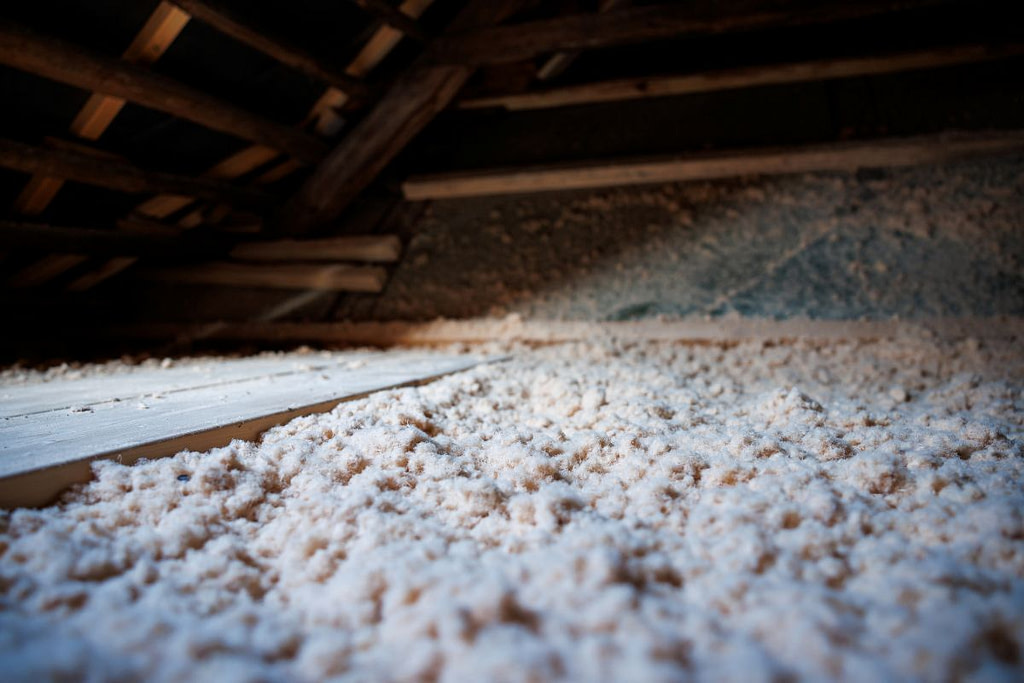
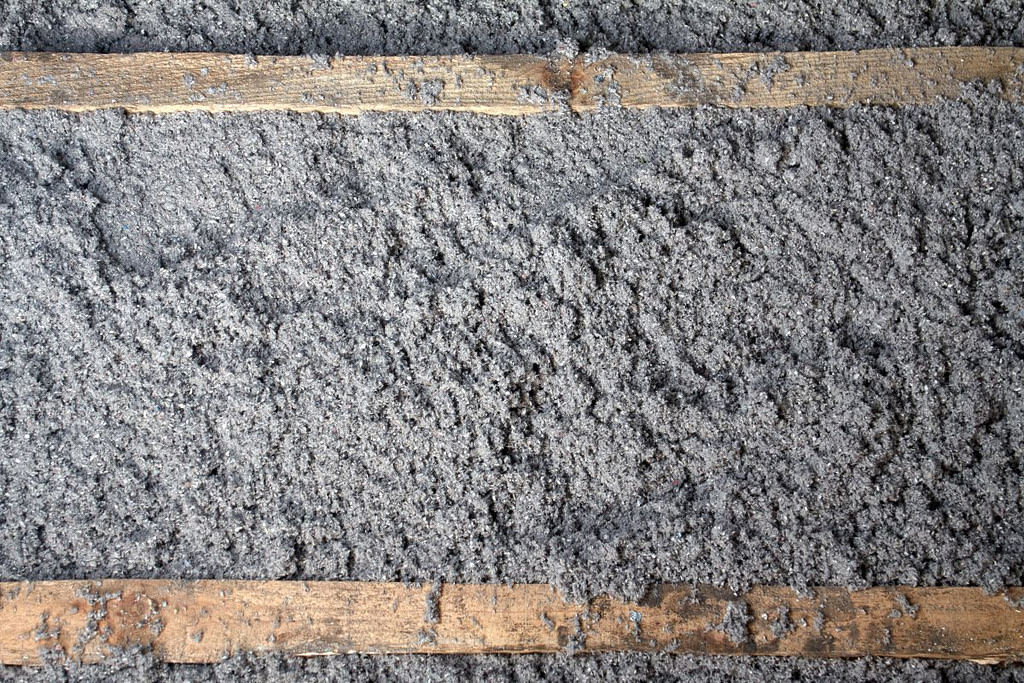
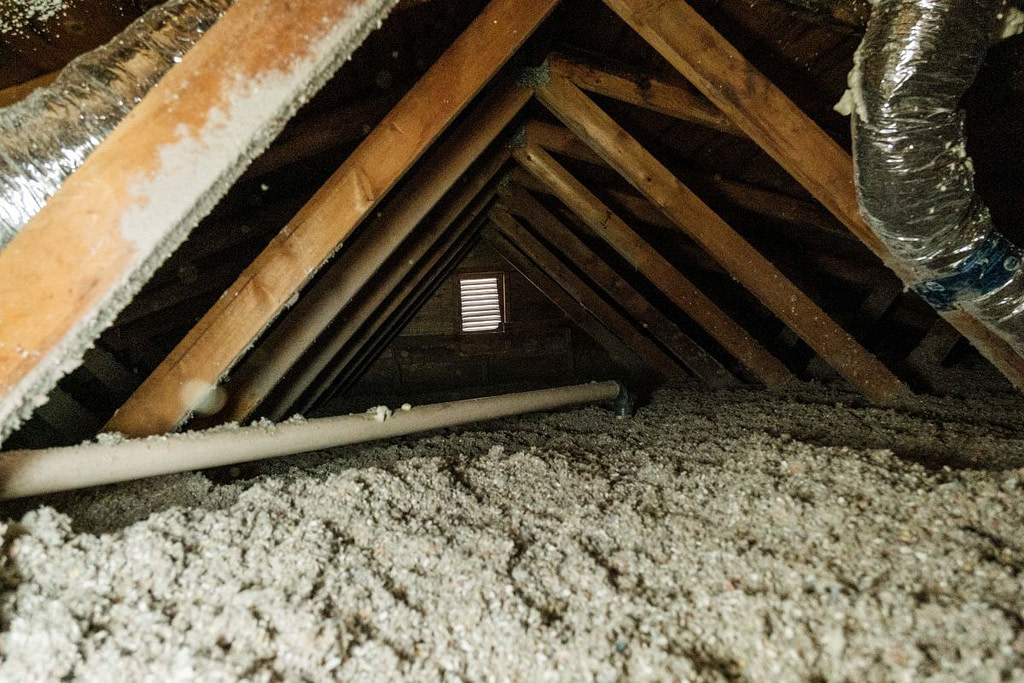
Once the attic is prepped, the insulation is blown in using a machine that fluffs the material and distributes it through a long hose. The installer works methodically across the attic floor, building the loose fill to a uniform depth that flows around joists, wiring, and obstructions to fill every gap. Depth markers or a ruler are used to confirm the material reaches the target thickness for the desired R-value throughout the space. This even, complete coverage is what gives blown-in insulation its performance edge. The result is a continuous thermal blanket with no seams or weak spots.
- Machine blown: A blower distributes material through a hose.
- Uniform depth: Built to a consistent thickness across the attic.
- Fills gaps: Flows around joists, wiring, and obstructions.
- Verified coverage: Depth is checked to hit the target R-value.
How Much Does Blown-In Attic Insulation Cost in 2026?
Blown-in attic insulation typically costs about $0.90 to $2.40 per square foot installed, or roughly $900 to $3,600 for an average attic in 2026. The final price depends on the attic size, the target R-value, the material, and accessibility.
Several Factors Shape the Final Price
Several factors shape the final cost of a blown-in attic insulation job, with attic size, R-value, material, and access being the biggest. A larger attic needs more material and labor, and a higher target R-value means greater depth and more material to install. Removing old or damaged insulation adds roughly $1 to $3 per square foot, and tight or hard-to-reach attics raise labor costs. Cellulose and fiberglass are close in price, while spray foam costs considerably more. Understanding these drivers helps you budget accurately and compare quotes fairly.
- Attic size: Larger areas need more material and labor.
- Target R-value: Higher R-values require greater depth and material.
- Old insulation removal: Adds about $1 to $3 per square foot.
- Accessibility: Tight or hard-to-reach attics raise the cost.
The cost and recommended R-value for attic insulation are well documented. According to home services cost guide HomeGuide, blown-in attic insulation costs $0.90 to $2.40 per square foot, or $900 to $3,600 on average, and the minimum recommended R-value for attic insulation is R-30 to R-60 depending on your geographic location. Cold climates like Iowa’s fall at the higher end of that R-value range, which affects how much material your attic needs.
6 Key Benefits of Blown-In Attic Insulation
Blown-in attic insulation delivers a range of benefits that make it one of the highest-return home upgrades available. The six benefits below capture why so many homeowners choose it for their attics.
1. Lower Energy Bills
The biggest benefit of blown-in attic insulation is lower energy bills, since the attic is where homes lose the most heat. By slowing the heat that escapes through the ceiling in winter and enters in summer, a well-insulated attic reduces the work your heating and cooling system has to do. This translates into meaningful savings on utility bills, with the greatest impact in cold climates that demand a lot of heating. Because the attic accounts for such a large share of energy loss, the return here is among the fastest of any home upgrade. Lower bills every month are the core reason to insulate.
- Reduces heat loss: Slows energy escaping through the ceiling.
- Eases HVAC load: Your system runs less to hold temperature.
- Cold-climate payoff: Savings are greatest where heating demand is high.
- Fast return: The attic offers among the quickest paybacks.
2. Complete, Gap-Free Coverage
A major benefit of blown-in insulation is its complete, gap-free coverage across the entire attic floor. Because it is applied as loose material, it flows around joists, wiring, pipes, and awkward corners, filling the gaps that rigid batts leave exposed. This continuous coverage means the insulation performs at its rated value across the whole area rather than just where it fits well. In older or irregular attics especially, this thorough coverage is a decisive advantage. No weak spots means no easy paths for heat to escape.
- Fills every gap: Flows around obstructions batts cannot cover.
- Continuous blanket: No seams or joints where heat slips through.
- Full performance: Delivers rated R-value across the whole attic.
- Great for retrofits: Excels in older and irregular attics.
3. Fast, Efficient Installation
Blown-in attic insulation offers the benefit of fast, efficient installation, often completed in a matter of hours for a typical attic. A professional crew with a blowing machine can cover an average attic floor quickly, with far less disruption than many home upgrades. This speed means you start seeing energy savings and comfort improvements almost immediately. The efficient process also keeps labor costs reasonable compared with more involved insulation methods. A quick installation with a big payoff is a compelling combination.
- Quick job: A typical attic is often done in hours.
- Low disruption: Far less invasive than many upgrades.
- Immediate benefit: Savings and comfort begin right away.
- Reasonable labor: Efficient work keeps costs in check.
4. Improved Comfort and Even Temperatures
Improved comfort through more even indoor temperatures is a benefit felt every day. By reducing the heat transfer through the attic, blown-in insulation helps eliminate the cold rooms, drafts, and temperature swings that plague under-insulated homes. Paired with air sealing, it keeps conditioned air where it belongs and outdoor temperatures out, so rooms stay comfortable in every season. This steadier, draft-free comfort is often what homeowners notice first after an upgrade. A more comfortable home is a benefit beyond just the dollar savings.
- Even temperatures: Reduces cold rooms and hot spots.
- Fewer drafts: Air sealing and insulation cut infiltration.
- Year-round comfort: Steadier temperatures in every season.
- Noticeable change: Comfort is often the first thing homeowners feel.
5. Moisture and Ice Dam Defense
Blown-in attic insulation, combined with proper ventilation, helps defend against moisture problems and ice dams. Adequate insulation keeps the attic and roof deck closer to the outdoor temperature, which reduces the uneven roof warming that melts snow and refreezes into damaging ice dams at the eaves. It also helps manage the temperature differences that lead to attic condensation when paired with balanced airflow. This protection guards your roof, ceilings, and structure from costly water damage. For homeowners in Charles City and surrounding areas, defending against ice dams is especially valuable in a cold Iowa climate.
- Ice dam defense: A cooler, even roof deck reduces ice dam formation.
- Condensation control: Works with ventilation to manage moisture.
- Protects the roof: Guards decking, ceilings, and structure.
- Cold-climate value: Especially important through Iowa winters.
6. Works Over Existing Insulation
A practical benefit of blown-in attic insulation is that it can usually be added right over existing insulation, making upgrades simple and affordable. As long as the current material is dry and free of mold or pest damage, new blown-in insulation can top it up to reach a higher R-value without a costly tear-out. This makes boosting an under-insulated attic one of the easiest efficiency upgrades a homeowner can make. Only damaged or contaminated insulation needs removal first. Adding over existing material keeps the upgrade fast and cost-effective.
- Simple top-up: Adds over sound existing insulation.
- No tear-out: Avoids costly removal when material is dry and clean.
- Boosts R-value: Brings an under-insulated attic up to target.
- Cost-effective: One of the easiest efficiency upgrades available.
Is Blown-In Attic Insulation Right for Your Home?
Blown-in attic insulation is right for most homes, especially those with under-insulated, older, or irregular attics where its gap-filling coverage shines. Weighing your current insulation, climate, and goals helps confirm it is the best choice.
It Suits Most Attics, Especially Under-Insulated Ones
Blown-in attic insulation suits most attics, and it is particularly valuable for homes that are under-insulated or have irregular, hard-to-reach spaces. If you can see your ceiling joists, feel drafts, or face high energy bills, your attic likely needs more insulation, and blown-in is often the most cost-effective way to add it. Its ability to cover odd shapes and add over existing material makes it ideal for retrofits. For cold climates, reaching the recommended R-value delivers strong, lasting savings. A professional can assess attics in Charles City and surrounding areas and confirm the right approach and R-value.
- Under-insulated homes: Ideal for attics below the recommended R-value.
- Irregular attics: Covers odd shapes and hard-to-reach areas.
- Retrofit ready: Adds easily over sound existing insulation.
- Cold-climate value: Reaching target R-value maximizes savings.
Frequently Asked Questions
How much does blown-in attic insulation cost in 2026?
Blown-in attic insulation typically costs $0.90 to $2.40 per square foot installed, or about $900 to $3,600 for an average attic, depending on size, R-value, material, and accessibility. Removing old insulation adds roughly $1 to $3 per square foot. A detailed, written estimate gives you an accurate figure for your home.
How much insulation does my attic need?
The recommended attic R-value is R-30 to R-60 depending on your climate, with cold regions like Iowa’s at the higher end, often around R-49 to R-60. If you can see your ceiling joists, you likely need more. Measuring your existing depth and comparing it to the target tells you how much to add.
How long does blown-in attic insulation take to install?
A professional crew can typically insulate an average attic in a matter of hours, since the blowing machine covers the floor quickly. Larger or harder-to-access attics take longer, and air sealing adds some time. The process is far less disruptive than many home upgrades.
Can blown-in insulation be added over existing insulation?
Yes, blown-in insulation can usually be added over existing insulation as long as the old material is dry and free of mold or pest damage. This is a common, cost-effective way to boost an under-insulated attic. Damaged or contaminated insulation should be removed first.
Which is better for attics, cellulose or fiberglass?
Both work well, with cellulose offering a higher R-value per inch and eco-friendly recycled content, and fiberglass resisting moisture and settling better. Cellulose is often slightly cheaper, while fiberglass holds its depth longer. A professional can help you choose the best fit for your attic and budget.
Does blown-in attic insulation really lower energy bills?
Yes, since the attic is where most homes lose the most heat, adding blown-in insulation to the recommended level meaningfully reduces heating and cooling costs. The savings are greatest in cold climates and in homes that were under-insulated. Pairing insulation with air sealing maximizes the benefit.
Trust Young Construction for Blown-In Attic Insulation
When it comes to blown-in attic insulation, Young Construction brings over 20 years of local experience and a clear understanding of how Iowa’s cold winters make attic insulation one of the smartest upgrades a homeowner can make. We prep and air seal your attic, protect your ventilation with baffles, and blow in the right material to the recommended depth for even, complete coverage that cuts energy bills and boosts comfort. As a family-owned, fully licensed and insured company with more than 150 five-star reviews, we treat your home with genuine care and explain every step and cost in plain terms. If your attic runs cold, your bills are climbing, or your insulation looks thin, you deserve an upgrade that pays you back for years. Contact Young Construction today to talk through your attic insulation needs and request a detailed, written estimate, and let our team make your home more comfortable and efficient.