Blown-in cellulose insulation is one of the most cost-effective and eco-friendly ways to insulate an attic or wall, made largely from recycled newspaper and blown into place to fill gaps that other insulation misses. It delivers a strong R-value per inch, excellent air sealing, and good sound dampening, all at a competitive price, which makes it a popular choice for homeowners looking to cut energy bills. Understanding how it works and what it costs helps you decide whether it is the right fit for your home. Here is what this guide covers:
- How it works: What blown-in cellulose is made of and how it is installed.
- Performance: Its R-value, air sealing, and how it compares to fiberglass.
- Cost: What blown-in cellulose insulation costs in 2026 and what drives the price.
What Is Blown-In Cellulose Insulation?
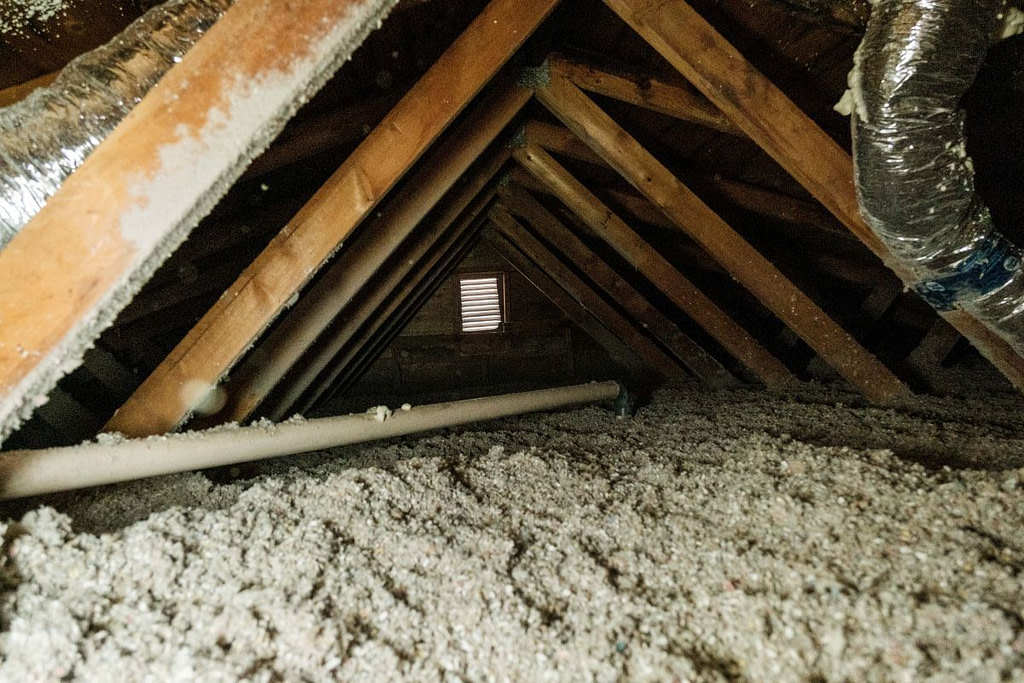
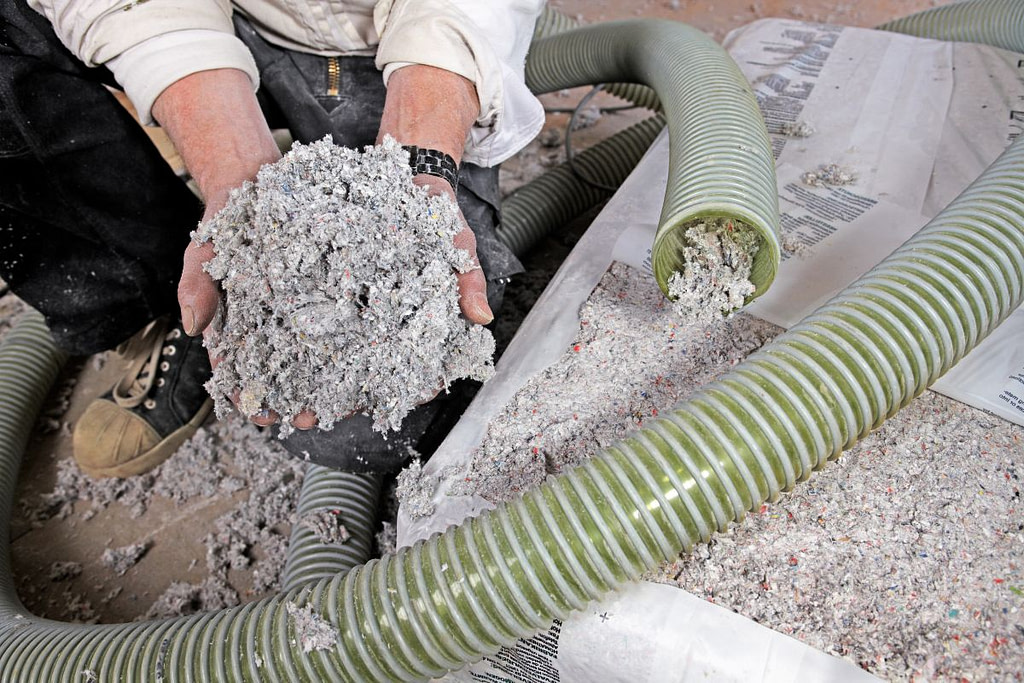
Blown-in cellulose insulation is a loose-fill insulation made primarily from recycled paper, usually newsprint, ground into dense fibers and treated with fire retardants. It is installed with a specialized blowing machine that fills cavities and evenly covers surfaces, making it ideal for attics, walls, and hard-to-reach spaces that batt insulation cannot fill well.
Cellulose Is Made From Recycled Paper
Blown-in cellulose is made from roughly 80 to 85 percent recycled newspaper, ground into fine fibers and treated with borate-based fire retardants for safety. This high recycled content makes it one of the most eco-friendly insulation options available, giving new life to paper that would otherwise be discarded. The borate treatment, typically boric acid and ammonium sulfate, adds resistance to fire, pests, and mold. Its dense, fibrous makeup is what gives cellulose its strong thermal and air-sealing performance. For environmentally conscious homeowners in Glenville and surrounding areas, that recycled content is a meaningful advantage.
- Recycled content: Roughly 80 to 85 percent recycled newspaper fiber.
- Fire retardant: Borate treatment adds fire, pest, and mold resistance.
- Eco-friendly: Repurposes paper that would otherwise be waste.
- Dense fibers: The tight makeup drives its thermal performance.
It Is Installed With a Blowing Machine
Blown-in cellulose is installed using a specialized machine that breaks up the compressed material and blows it through a hose into the space being insulated. For open attics, the loose-fill cellulose is blown across the floor to an even depth, while for enclosed walls, a denser application called dense-pack is blown under pressure into the cavities. This method lets the material flow around wiring, pipes, and framing, filling gaps that rigid batts leave behind. The result is complete, consistent coverage that seals air leaks well. This ability to reach tight and irregular spaces is one of cellulose’s biggest practical advantages.
- Machine applied: A blower fluffs and distributes the material through a hose.
- Loose-fill attics: Blown to an even depth across the attic floor.
- Dense-pack walls: Blown under pressure into enclosed wall cavities.
- Fills gaps: Flows around wiring, pipes, and framing for full coverage.
3 Performance Advantages of Blown-In Cellulose
Blown-in cellulose performs well thanks to a strong R-value per inch, excellent air-sealing density, and good sound control. The three performance traits below make it especially well suited to cold climates, though there are tradeoffs worth understanding.
1. It Delivers a Strong R-Value Per Inch
Blown-in cellulose delivers an R-value of approximately R-3.1 to R-3.8 per inch, giving it a better thermal barrier per inch than most loose-fill fiberglass. This means it takes less thickness to reach a target R-value, which is useful in space-limited areas. Its higher density resists airflow better than fluffier fiberglass, reducing the air infiltration that undermines insulation performance. In colder climates, that density creates a more effective thermal barrier against heat loss, which serves homes in Glenville and surrounding areas well through Iowa winters. For homeowners wanting strong energy performance, cellulose’s R-value is a key selling point.
- Solid R-value: Roughly R-3.1 to R-3.8 per inch of thermal resistance.
- Less thickness needed: Reaches target R-values in less depth than fiberglass.
- Air resistance: Higher density limits performance-robbing air infiltration.
- Cold-climate fit: Dense fiber excels at blocking heat loss.
2. It Settles and Must Be Installed Accordingly
Blown-in loose-fill cellulose settles roughly 15 to 20 percent over the first few years, which is an important characteristic to plan for. As the material compacts, its depth decreases, so installers deliberately add extra depth at installation to ensure it still meets the target R-value after settling. A quality installation accounts for this from the start, so the finished insulation performs as intended for the long haul. Fiberglass settles far less, but cellulose’s density still gives it a performance edge in many applications. Understanding settling helps you see why proper installation depth matters so much.
- Expected settling: Loose-fill cellulose compacts about 15 to 20 percent.
- Install extra depth: Pros add depth to offset future settling.
- Long-term R-value: Proper depth keeps performance on target.
- Quality matters: Good installation plans for settling from the start.
3. It Offers Good Sound Dampening
Blown-in cellulose offers good sound-dampening qualities thanks to its dense, fibrous composition that absorbs and blocks noise. The tightly packed fibers reduce sound transmission through walls and ceilings better than lighter, fluffier insulation, which is a welcome benefit in busy households or near noisy exteriors. This makes cellulose a dual-purpose choice, improving both energy efficiency and acoustic comfort. While sound control is rarely the main reason to choose it, it is a meaningful bonus. Homeowners often notice a quieter home after a cellulose upgrade.
- Noise absorption: Dense fibers reduce sound transmission.
- Quieter rooms: Blocks noise through walls and ceilings.
- Dual benefit: Improves both energy efficiency and quiet.
- Welcome bonus: A noticeable perk alongside thermal performance.
How Much Does Blown-In Cellulose Insulation Cost in 2026?
Blown-in cellulose insulation costs roughly $0.60 to $2.30 per square foot installed for loose-fill in attics, with dense-pack wall applications running higher. The final price depends on the area size, the depth required for your target R-value, and accessibility.
Loose-Fill and Dense-Pack Have Different Costs
Loose-fill and dense-pack cellulose carry different price points because they serve different applications. Loose-fill cellulose blown into open attics is the most economical, generally running about $0.60 to $2.30 per square foot installed, while dense-pack cellulose blown into enclosed walls costs more, around $1.50 to $3.00 per square foot, because it requires more material and specialized technique. Material-only costs run roughly $0.40 to $1.00 per square foot before labor. Most full installations fall between $2,000 and $10,000 depending on the scope. Matching the application to your space helps you understand where your costs will land.
- Loose-fill attics: Roughly $0.60 to $2.30 per square foot installed.
- Dense-pack walls: Around $1.50 to $3.00 per square foot.
- Material only: About $0.40 to $1.00 per square foot before labor.
- Full installs: Typically $2,000 to $10,000 depending on scope.
Several Factors Affect Your Final Price
Several factors affect the final cost of a blown-in cellulose installation, with area size, target R-value, and accessibility being the biggest. A larger area requires more material and labor time, and a higher target R-value means greater depth and more material. Removing old insulation adds labor and disposal costs, and hard-to-reach attics or walls raise the price due to added difficulty. Local labor rates and your climate zone’s R-value requirements also shape the total. Understanding these factors helps you budget realistically and compare quotes accurately.
- Area size: Larger spaces need more material and labor time.
- Target R-value: Higher R-values require greater depth and material.
- Old insulation removal: Adds labor and disposal costs.
- Accessibility: Tight or tall spaces increase the price.
For a realistic budget, it helps to anchor to independent cost data. According to home services cost guide HomeGuide, blown cellulose insulation costs $0.60 to $4.20 per square foot with installation depending on the type and area size, with its R-3.1 to R-3.8 per inch providing a better thermal barrier than fiberglass. Comparing your estimate against that range helps you judge whether a quote is fair.
Is Blown-In Cellulose Right for Your Home?
Deciding whether blown-in cellulose is right for your home comes down to your climate, the space you are insulating, your budget, and your priorities around eco-friendliness. It is an excellent fit for many homes, but it helps to weigh its tradeoffs.
Weigh the Benefits Against the Tradeoffs
Weighing cellulose’s benefits against its tradeoffs helps you make the right call for your home. On the plus side, it offers a strong R-value per inch, excellent air sealing, high recycled content, good sound control, and a competitive price, making it one of the best values in insulation. On the other hand, loose-fill cellulose settles over time, can absorb moisture if not properly sealed, and, despite fire-retardant treatment, some experts advise caution in fire-prone regions. For most homes in cold climates, the benefits clearly outweigh the drawbacks. A professional can assess spaces in Glenville and surrounding areas and confirm whether cellulose is the best choice.
- Strong benefits: High R-value, air sealing, recycled content, and value.
- Settling and moisture: It settles over time and must be kept dry.
- Fire consideration: Treated for fire, but caution advised in some regions.
- Cold-climate value: Benefits typically outweigh tradeoffs in cold areas.

Frequently Asked Questions
How much does blown-in cellulose insulation cost?
Blown-in cellulose typically costs $0.60 to $2.30 per square foot installed for loose-fill attic applications, with dense-pack wall installations running about $1.50 to $3.00 per square foot. Most full installations fall between $2,000 and $10,000 depending on the area, depth, and accessibility. A detailed, written estimate gives you an accurate figure for your home.
What is the R-value of blown-in cellulose?
Blown-in cellulose has an R-value of approximately R-3.1 to R-3.8 per inch, which is higher than most loose-fill fiberglass. This means it reaches a target R-value in less thickness. For a cold-climate attic targeting around R-49, that translates to roughly 13 to 16 inches of depth after settling.
Is cellulose better than fiberglass?
Cellulose offers a higher R-value per inch, better air resistance, higher recycled content, and good sound dampening, and it is often slightly cheaper than fiberglass. Fiberglass settles less and resists moisture better. The best choice depends on your climate, application, and priorities, so a professional can help you decide.
Does blown-in cellulose settle over time?
Yes, loose-fill cellulose settles roughly 15 to 20 percent over the first few years as it compacts. Quality installers account for this by adding extra depth at installation so the insulation still meets its target R-value after settling. This is why proper installation depth is so important.
Is cellulose insulation safe and fire-resistant?
Cellulose is treated with borate-based fire retardants that add resistance to fire, pests, and mold. That said, the base material is paper, so some experts advise caution in fire-prone regions. When properly installed and kept dry, cellulose is a safe, effective, and widely used insulation.
Can blown-in cellulose be added over existing insulation?
Yes, blown-in cellulose can usually be added over existing insulation as long as the old material is dry and free of mold or pest damage. This is a common and cost-effective way to boost an under-insulated attic. If the existing insulation is damaged or wet, it should be removed first.
Trust Young Construction for Blown-In Cellulose Insulation
When it comes to blown-in cellulose insulation, Young Construction brings over 20 years of local experience and a clear understanding of how Iowa’s cold winters reward a dense, well-sealed insulation like cellulose. We assess your space, calculate the right depth to hit your target R-value even after settling, and install cellulose evenly for complete coverage that seals air leaks and cuts energy bills. As a family-owned, fully licensed and insured company with more than 150 five-star reviews, we treat your home with genuine care and explain every material choice and cost in plain terms. If you are weighing an insulation upgrade and want an eco-friendly option that performs in our climate, you deserve honest guidance from a team that does it right. Contact Young Construction today to talk through your insulation needs and request a detailed, written estimate, and let our team help you build a warmer, quieter, more efficient home.