A shingle roof replacement is a major investment, so knowing the warning signs that your roof has reached the end of its life helps you act before small problems become expensive water damage. Roofs rarely fail all at once, and the earliest indicators, such as curling shingles, granule loss, or a recurring leak, usually appear well before a dramatic failure. Learning to spot these signals lets you plan a replacement on your terms rather than scrambling after a ceiling stain or a storm. Here is what this guide covers:
- The warning signs: The six clearest indicators that your shingle roof needs replacing.
- Repair versus replace: How to tell when a fix will do and when it is time for a new roof.
- Why acting now matters: How catching these signs early protects your home and budget.
Why Timing Your Roof Replacement Matters
Timing a roof replacement well protects both your home and your wallet, since a failing roof lets water reach the deck, insulation, and framing where it causes costly damage. Acting on the early signs lets you replace on a planned schedule rather than after an emergency leak forces your hand.
The Cost of Waiting Too Long
Waiting too long to replace a failing shingle roof allows minor issues to escalate into major structural and interior damage. Once shingles can no longer keep water out, moisture reaches the roof deck, rafters, insulation, and eventually your ceilings and walls, leading to rot, mold, and expensive repairs far beyond the roof itself. A planned replacement is almost always cheaper than an emergency one that follows water intrusion. Catching the problem while it is still confined to the shingles keeps the scope and cost contained. For homeowners in Emmons and surrounding areas, acting early is the difference between a straightforward replacement and interior water damage.
- Escalating damage: Small problems spread into the deck, framing, and interior.
- Higher costs: Emergency replacement after a leak costs more than a planned one.
- Interior risk: Water intrusion leads to rot, mold, and ceiling damage.
- Contained scope: Acting early keeps the repair limited to the roof.
Repair or Replace Comes Down to Condition
The choice between repairing and replacing comes down to the roof’s age, the extent of the damage, and whether problems are localized or widespread. Localized damage on a younger roof is usually a repair, while systemic damage on an older roof points to replacement. A single missing shingle or one isolated leak rarely justifies a new roof, but widespread wear, repeated leaks, or damage across multiple slopes usually does. Basing the decision on overall condition rather than a single problem area helps you invest wisely. A professional evaluation clarifies which path makes sense for your roof.
- Age and extent: Older roofs with widespread damage lean toward replacement.
- Localized versus systemic: Isolated issues are repairs, broad wear is replacement.
- Not every problem: One missing shingle rarely means a whole new roof.
- Condition-based: Overall condition, not one spot, guides the decision.
6 Signs You Need a Shingle Roof Replacement
Recognizing the signs that your shingle roof needs replacing helps you act before the damage spreads. The six signs below are the clearest indicators that a replacement, rather than another patch, is the right move.
1. Curling, Cupping, or Buckling Shingles
Curling, cupping, or buckling shingles are among the clearest signs a shingle roof is reaching the end of its life. As the asphalt dries and shrinks over years of UV exposure, shingles become brittle and their edges lift or warp, leaving them unable to lay flat and seal out water. Curled shingles are far more vulnerable to wind uplift and water infiltration, and they can break easily. Localized curling may be a repair, but curling across a large share of the roof signals the terminal phase. When this shows up widely, replacement is usually the answer.
- Aging asphalt: Drying and shrinking cause shingles to curl and warp.
- Lost seal: Curled shingles no longer lay flat to keep water out.
- Wind vulnerability: Lifted edges are prone to blow-off and leaks.
- Widespread signal: Curling across the roof points to replacement.
2. Widespread Granule Loss and Bald Spots
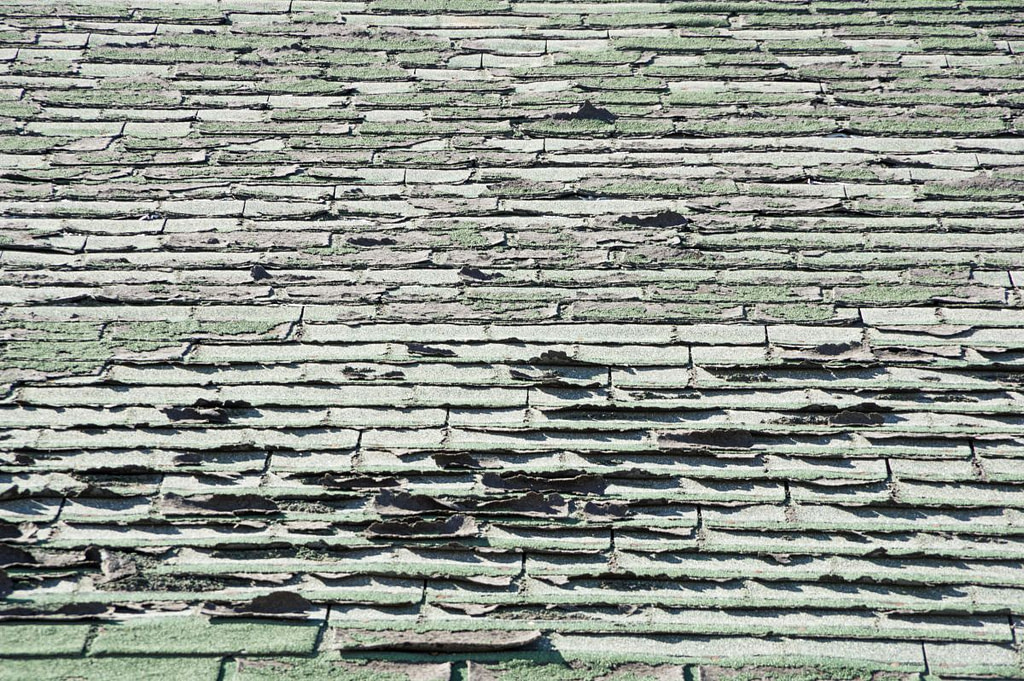
Widespread granule loss with exposed asphalt is a major sign that your shingles are breaking down and need replacing. Granules protect the asphalt from UV rays and add fire resistance, so when they wear away in concentrated areas, the underlying mat is exposed and deteriorates rapidly. Finding piles of granules in gutters and downspouts, or seeing shiny dark patches and bald spots on the roof, indicates the surface is failing. While some granule loss is normal over a roof’s life, heavy loss with visible asphalt is a warning sign. Bald spots concentrated in one area may be localized, but broad loss signals it is time.
- Lost protection: Missing granules expose asphalt to accelerated UV wear.
- Check the gutters: Granules collecting in downspouts signal breakdown.
- Bald spots: Exposed asphalt mat means the surface is failing.
- Widespread loss: Broad granule loss across the roof points to replacement.
3. Missing Shingles and Repeated Blow-Offs
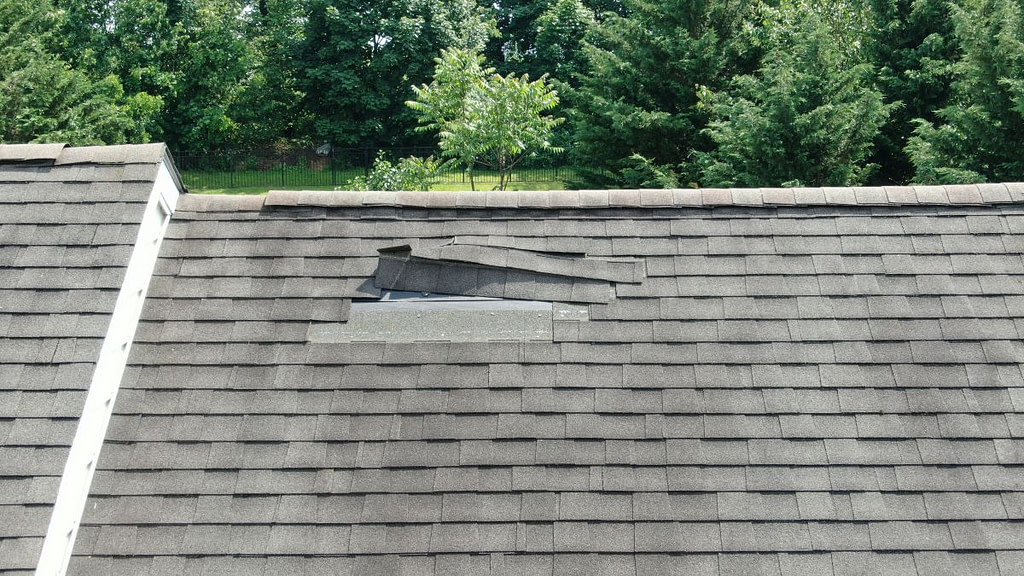
Missing shingles across multiple slopes, or shingles that repeatedly blow off, often indicate that the adhesive seals holding them have failed. A few missing shingles from a single storm may be a straightforward repair, but repeated blow-offs across the roof point to systemic adhesion or installation failure. Each gap leaves the underlayment and deck exposed to water, wind, and pests. When shingles keep coming loose no matter how often they are replaced, the roof system itself is failing. Recurring loss across the roof is a strong signal that replacement is due.
- Failed seals: Repeated blow-offs mean the adhesive bonds have weakened.
- Exposed deck: Each gap leaves underlayment and decking vulnerable.
- Repair versus system: A few is a repair, repeated loss is systemic.
- Recurring loss: Shingles that keep failing signal a failing roof.
4. Recurring Leaks and Water Stains
Recurring leaks or water stains appearing in multiple areas are a strong sign that the roofing system is failing rather than needing a simple patch. One isolated leak from a specific cause is usually repairable, but leaks showing up in different spots point to broad deterioration of the shingles, flashing, or underlayment. Water stains on ceilings and walls, or damp spots in the attic, mean moisture is already getting past the roof. Left unaddressed, these leaks lead to rot, mold, and structural damage. Multiple or recurring leaks are one of the most reliable signals it is time for a new roof.
- Multiple locations: Leaks in different spots suggest system-wide failure.
- Interior clues: Ceiling stains and attic dampness reveal water intrusion.
- Beyond patching: Recurring leaks are not solved by another spot repair.
- Damage risk: Ongoing leaks cause rot, mold, and structural harm.
5. Sagging Deck or Daylight in the Attic
A sagging roof deck or daylight visible through the roof from inside the attic is a serious sign that demands immediate attention and usually replacement. Sagging along the deck, ridges, or rafters indicates a structural concern, often from long-term moisture damage weakening the wood. Daylight coming through the roof boards means there are gaps or deterioration that are letting water and air in. These are among the most urgent indicators, since they point to problems beyond the shingles themselves. Any sign of sagging or daylight in the attic warrants prompt professional evaluation.
- Structural concern: Sagging points to weakened decking or framing.
- Daylight through boards: Visible gaps mean water and air are getting in.
- Moisture damage: Long-term leaks can rot and weaken the deck.
- Urgent action: These signs call for prompt professional attention.
6. Roof Age Past Its Service Life
A roof at or past its expected service life is a sign to plan for replacement even without obvious damage. Most asphalt shingle roofs are designed to last around 20 to 30 years depending on shingle type, installation, and climate, and problems become far more likely as a roof approaches that range. If your roof is nearing or beyond its design life, subtle deterioration is often already underway beneath the surface. Replacing proactively near end of life is often smarter than waiting for a failure. For homeowners in Emmons and surrounding areas, knowing your roof’s age helps you budget and act before an emergency.
- Design life: Most asphalt roofs are built for about 20 to 30 years.
- Rising risk: Failures grow more likely as the roof nears that range.
- Hidden wear: Deterioration is often underway before it is visible.
- Proactive planning: Replacing near end of life beats an emergency.
The lifespan reference behind that final sign comes from the home inspection industry, not shingle marketing. The International Association of Certified Home Inspectors lists the standard life expectancy of 3-tab asphalt shingles at 20 years and architectural asphalt shingles at 30 years on its life expectancy chart for homes. Comparing your roof’s age against that benchmark helps you judge whether replacement is on the horizon.
What to Do When You Spot the Signs
When you notice one or more of these signs, the smart next step is a professional roof evaluation to determine whether repair or replacement is warranted. Acting promptly protects your home and gives you time to plan the work properly.
A Professional Evaluation Clarifies Your Options
A professional roof evaluation clarifies whether your roof needs a repair, a partial fix, or a full replacement, and it removes the guesswork from the decision. A qualified roofer examines the shingles, flashing, decking, and attic for the full picture, distinguishing localized damage from systemic failure. This assessment helps you avoid both premature replacement and the risk of patching a roof that is truly failing. It also gives you a clear scope and estimate so you can plan and budget with confidence. For homeowners in Emmons and surrounding areas, getting an expert opinion is the surest way to make the right call for your home.
- Full inspection: A roofer checks shingles, flashing, decking, and attic.
- Accurate diagnosis: Distinguishes localized damage from system failure.
- Avoids extremes: Prevents both premature replacement and risky patching.
- Clear plan: Provides a scope and estimate for confident budgeting.
Frequently Asked Questions
How do I know if I need a roof replacement or just a repair?
Localized damage on a younger roof is usually a repair, and roof repairs are often the more cost-effective option when damage is localized and the rest of the roof is still in good condition, while systemic or widespread damage on an older roof typically calls for replacement. A single missing shingle or one isolated leak is often repairable, but recurring leaks, widespread curling, or an aging roof point to replacement. A professional evaluation gives you a definitive answer.
What is the most serious sign my roof needs replacing?
A sagging roof deck or daylight visible through the roof from the attic is among the most serious signs, since it indicates structural or system-wide failure. These issues demand immediate professional attention. Recurring leaks in multiple areas are another strong signal the roofing system is failing.
How long do asphalt shingles last?
Most asphalt shingle roofs last around 20 to 30 years depending on the shingle type, installation quality, and climate. The International Association of Certified Home Inspectors lists 3-tab shingles at 20 years and architectural at 30. Harsh weather and poor ventilation can shorten these figures.
Can granule loss mean I need a new roof?
Widespread granule loss with exposed asphalt is a strong sign your shingles are breaking down and may need replacing. Some granule loss is normal over a roof’s life, but heavy loss with bald spots and granules filling your gutters indicates the surface is failing. A professional can assess whether repair or replacement is warranted.
Should I replace my roof before it starts leaking?
Yes, replacing a roof that is near the end of its service life before it leaks can save you from interior water damage and higher emergency costs. Structural deterioration often develops beneath intact-looking shingles. Proactive replacement is frequently more cost-effective than waiting for a failure.
How often should I have my roof inspected?
You should have your roof inspected at least once a year, and after any major storm, to catch warning signs early. Regular inspections help you address small issues before they spread and let you plan a replacement on your schedule. Annual professional inspections are the simplest way to protect your investment.

Trust Young Construction for Your Shingle Roof Replacement
When it comes to a shingle roof replacement, Young Construction brings over 20 years of local experience and a clear understanding of how Iowa’s weather wears down a roof over time. We evaluate your shingles, flashing, decking, and attic to give you an honest assessment of whether a repair will do or replacement is the smarter long-term move, and we back every recommendation with straightforward guidance rather than pressure. As a family-owned, fully licensed and insured company with more than 150 five-star reviews, we install roofs built to withstand heavy snow, ice, and storms for decades to come. If you have noticed curling shingles, granules in your gutters, recurring leaks, or a roof nearing the end of its life, you deserve a team that will tell you the truth and do the job right. Contact Young Construction today to talk through your roofing needs and request a detailed, written estimate, and let our team protect your home before small problems become big ones.