Knowing when it’s time for a TPO roof replacement can save commercial property owners from unexpected repair costs and operational disruptions. Over time, even the most durable thermoplastic polyolefin (TPO) roofing systems experience wear from UV exposure, foot traffic, and temperature fluctuations. Recognizing the warning signs early ensures your building remains watertight, energy-efficient, and structurally sound.
- Preventive maintenance: Early detection reduces costly emergency repairs.
- Longevity awareness: Knowing when to replace extends your roof investment.
- Energy performance: Timely replacement restores efficiency and insulation value.
When Does a TPO Roof Need Replacement?
Most TPO roofs last between 20 and 30 years, depending on installation quality, climate, and maintenance practices. As your roof approaches the end of its service life, small issues can become larger structural concerns if left unaddressed.
While routine maintenance and coatings can extend lifespan, all roofing materials eventually degrade. By scheduling inspections and identifying key indicators of failure, you can plan a replacement before leaks cause damage to insulation, decking, or interior systems.
7 Warning Signs You May Need a TPO Roof Replacement
Aging TPO roofs don’t always fail suddenly — they often display progressive symptoms that indicate deterioration. Here are the most common signs that your commercial roof is nearing the end of its life cycle.
1. Frequent or Widespread Leaks
A single leak might only require repair, but recurring leaks across multiple areas are often a sign that the membrane has reached its limit.
- Seam separation: Over time, heat-welded seams can lose adhesion.
- Membrane brittleness: Aging TPO loses flexibility, allowing cracks to form.
- Hidden damage: Water can travel between insulation layers, causing unseen rot.
When leaks become repetitive or widespread, a full replacement is often the most cost-effective solution.
2. Pooling or Standing Water
TPO roofs are designed to shed water efficiently, but ponding water indicates drainage or slope issues that may compromise the system.
- Drain blockages: Debris buildup prevents proper flow.
- Membrane fatigue: Prolonged ponding weakens seams and adhesives.
- Structural sagging: Excess weight from standing water can stress roof decking.
Persistent water accumulation accelerates deterioration and may void warranty coverage, making early intervention essential.
3. Surface Cracks, Blisters, or Punctures
The membrane surface is your roof’s first line of defense. When cracks, blisters, or punctures develop, water and UV rays can quickly damage underlying materials.
- Thermal expansion: Daily temperature swings cause surface tension.
- Puncture damage: Heavy equipment or foot traffic can tear the membrane.
- Chemical wear: HVAC exhaust and pollutants can erode material integrity.
Extensive cracking or bubbling is often a sign that the material’s flexibility and adhesion are failing, signaling the need for replacement.
4. Discoloration and UV Degradation
TPO roofing is valued for its reflective white surface, which reduces heat absorption. Over time, prolonged UV exposure can fade or yellow the membrane, reducing its energy efficiency.
- Color fading: Indicates UV oxidation and coating wear.
- Surface chalking: White powder residue shows chemical breakdown.
- Heat absorption: Darkened areas increase rooftop temperatures.
Discoloration not only affects appearance but also contributes to higher cooling costs and faster material aging.
5. Shrinkage Around Edges and Seams
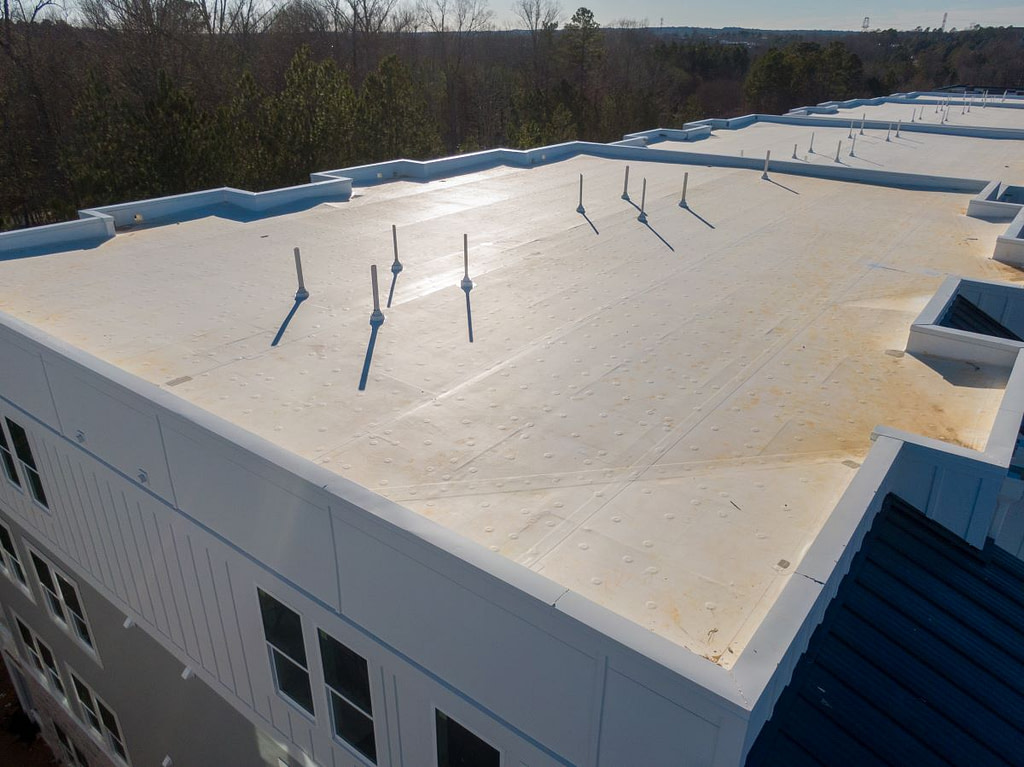
One of the clearest indicators of TPO aging is membrane shrinkage, which causes stress at seams and roof edges.
- Pulled flashing: Shrinking membranes lift flashing or edge details.
- Exposed fasteners: Tension causes fasteners to loosen or pop.
- Open seams: Water intrusion becomes more likely with each contraction cycle.
Shrinkage is irreversible and typically signifies that the roof has reached the end of its serviceable life.
6. Persistent Energy Inefficiency
If your energy bills have increased despite normal HVAC performance, your roof may no longer be reflecting sunlight or insulating effectively.
- Lost reflectivity: UV wear reduces solar reflection.
- Insulation compression: Moisture saturation diminishes R-value.
- Air leaks: Loose seams allow conditioned air to escape.
A new TPO roof restores your building’s energy efficiency by providing a reflective, airtight, and well-insulated surface.
7. Age and Diminishing Warranty Coverage
Even if your roof appears intact, age alone can justify replacement. Most warranties for TPO systems last 15 to 25 years, depending on the manufacturer.
- Expired warranty: Repairs or failures may no longer be covered.
- Material fatigue: Older membranes lose elasticity and flexibility.
- Diminished return on repairs: Costs for patching may outweigh full replacement.
Once your TPO system approaches its maximum service life, proactive replacement is the best way to avoid unplanned downtime or damage.
Cost of TPO Roof Replacement in 2026
Replacement costs for TPO roofs depend on building size, membrane thickness, and labor requirements. In 2026, most commercial property owners can expect to pay between $6 and $11 per square foot for complete replacement.
Factors that influence total cost include:
- Roof condition: Removing old material or repairing damage increases cost.
- Membrane thickness: Thicker membranes (60–80 mils) cost more but last longer.
- Insulation upgrades: Replacing wet or outdated insulation improves performance.
- Accessibility: Multi-story buildings or complex structures require additional labor and equipment.
Although replacement involves an upfront investment, it delivers long-term savings through lower maintenance costs, energy efficiency, and reduced risk of leaks.
Benefits of Replacing Your TPO Roof
A new TPO system not only restores protection but also enhances performance across multiple areas of your building’s operation.
Improved Weather Resistance
Modern TPO formulations provide superior resistance to UV rays, wind, and ponding water.
- Reinforced seams: Welded joints are stronger than traditional adhesives.
- Enhanced durability: Withstands thermal movement and heavy rainfall.
- Optimized slope designs: Improve drainage to prevent standing water.
Energy Efficiency and Sustainability
New TPO membranes are engineered with advanced reflective coatings that lower roof surface temperatures and reduce cooling costs.
- Cool roof technology: Reflects solar radiation and minimizes heat absorption.
- Lower HVAC demand: Reduces equipment workload and energy use.
- Environmentally conscious: Fully recyclable at the end of its life cycle.
Reduced Maintenance and Long-Term Value
A properly installed TPO roof requires minimal maintenance, saving property owners time and money.
- Lower repair frequency: New membranes resist punctures and cracking.
- Warranty protection: New systems include updated coverage for peace of mind.
- Operational reliability: Prevents leaks that can disrupt business operations.
Comparison: Repair vs. Replacement
Sometimes repairs can extend a roof’s life, but for older or severely damaged systems, replacement often delivers better value.
| Category | Repair | Replacement |
| Initial Cost | Lower | Higher |
| Long-Term Value | Moderate | Excellent |
| Performance | Temporary improvement | Full restoration |
| Energy Efficiency | Slightly improved | Significantly enhanced |
| Warranty Coverage | Limited | New manufacturer warranty |
If your roof shows several signs of aging or has exceeded 20 years, replacement provides more reliable protection and cost savings in the long run.
How to Prepare for a TPO Roof Replacement
Proper planning helps ensure a smooth and efficient installation process that minimizes disruption to your business.
Preparation Steps
- Schedule a professional inspection: Determine current roof condition and estimate remaining lifespan.
- Review your options: Choose membrane thickness and insulation suited to your building’s climate.
- Set a timeline: Plan installation during mild weather to avoid weather delays.
- Communicate with tenants or staff: Inform occupants of project timing and safety measures.
Partnering with an experienced commercial roofer ensures your replacement process is seamless, safe, and aligned with your operational needs.
Protect Your Investment With Young Construction
Your commercial roof is one of the most valuable assets of your property. At Young Construction, we specialize in TPO roof replacement services that enhance durability, energy efficiency, and long-term protection for businesses of all sizes.Safeguard your building and reduce future maintenance costs with a high-performance roofing system. Contact Young Construction today for a free estimate and let our experts help you plan the perfect TPO roof replacement for your commercial property in 2026 and beyond.