Choosing the right flat roof coating can dramatically extend the lifespan of your commercial roofing system while improving energy efficiency and weather resistance. For property owners, coatings provide an affordable alternative to full replacement — creating a seamless, watertight surface that restores performance and protects against UV exposure, ponding water, and thermal expansion.
- Cost-effective protection: Coatings seal minor cracks and extend roof life.
- Energy savings: Reflective coatings lower interior temperatures.
- Minimal disruption: Application is faster and less invasive than replacement.
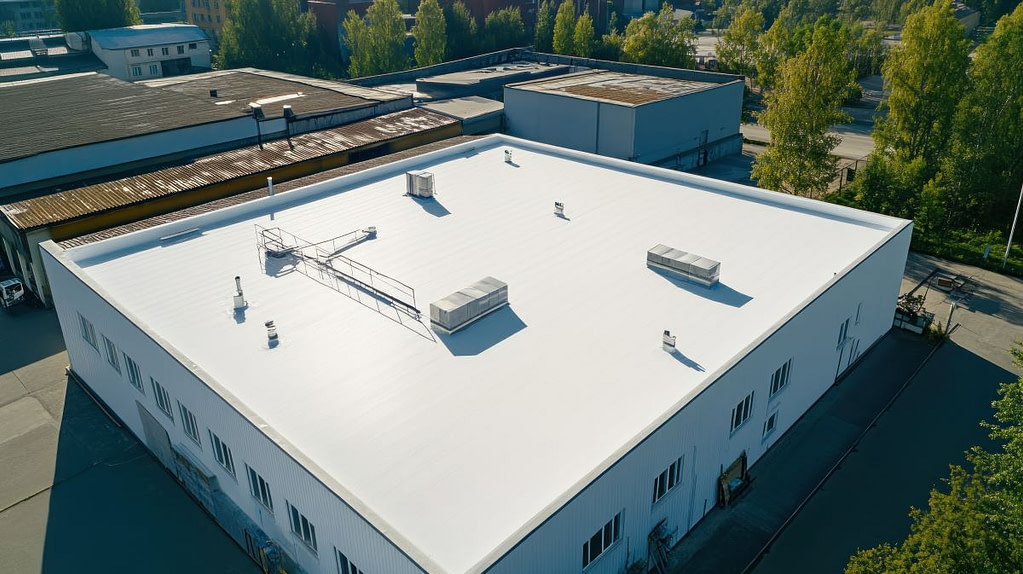
Why Flat Roof Coatings Are Essential for Commercial Buildings
Flat roofs endure constant exposure to sunlight, rain, and temperature changes. Over time, these elements degrade materials, causing cracks, leaks, and surface wear. Roof coatings serve as an extra layer of defense that shields the surface and prevents these problems before they escalate.
A professional-grade coating not only protects your investment but also improves your building’s energy efficiency. Reflective properties reduce heat absorption, lowering cooling costs during warmer months. For commercial property owners, this translates into improved performance and reduced maintenance costs over the life of the roof.
How Roof Coatings Work
Roof coatings are liquid-applied membranes that bond directly to the existing roofing surface. When cured, they create a continuous, flexible barrier that resists moisture, UV radiation, and chemical exposure.
Unlike overlays or new installations, coatings require minimal tear-off and can be applied to a variety of commercial roof systems — including EPDM, modified bitumen, PVC, and metal. This makes them a highly versatile solution for both aging and newer roofs.
Benefits of Applying a Roof Coating
- Leak prevention: Seals pinholes, seams, and cracks to prevent water intrusion.
- Improved energy efficiency: Reflects sunlight to lower roof temperature.
- Reduced maintenance: Protects from debris buildup and material degradation.
- Extended lifespan: Adds 10–20 years of service life to many flat roofs.
For property owners, coatings provide a low-cost, high-value method to restore roofing performance without the downtime or expense of full replacement.
3 Best Types of Flat Roof Coating
Not all coatings perform the same. Each type offers unique strengths, depending on your building’s environment, roof material, and maintenance goals. Below are three of the best options for commercial flat roofs, along with how they compare.
1. Acrylic Roof Coatings
Acrylic coatings are water-based and highly reflective, making them one of the most popular options for commercial flat roofs. These coatings provide excellent UV protection and are ideal for climates with mild to moderate weather conditions.
Acrylic coatings are known for their affordability and ease of application, though they may not perform as well under constant ponding water.
Pros:
- UV resistance: Reflective white surface helps reduce cooling costs.
- Cost-effective: Lower material and labor costs than other coatings.
- Environmentally friendly: Water-based formulas with low VOCs.
- Easy application: Can be sprayed or rolled directly onto most surfaces.
Cons:
- Water sensitivity: Can lose adhesion if exposed to standing water.
- Reapplication frequency: May require re-coating every 5–10 years.
- Temperature limitations: Less effective in extremely cold or wet climates.
Best For: Property owners seeking an economical, reflective coating solution for roofs with proper drainage and minimal ponding issues.
2. Silicone Roof Coatings
Silicone coatings are known for their superior moisture resistance and flexibility. Unlike acrylic coatings, silicone maintains performance even under standing water, making it an excellent choice for roofs with drainage challenges.
Because of their high solids content, silicone coatings form a durable, waterproof barrier that resists UV degradation and chemical exposure.
Pros:
- Outstanding waterproofing: Ideal for flat roofs with ponding or heavy rain.
- UV stability: Retains color and reflectivity for years.
- Minimal maintenance: Requires less frequent re-coating compared to acrylic.
- Temperature resistance: Performs well in both hot and cold environments.
Cons:
- Higher cost: More expensive than acrylic coatings.
- Slippery surface: Can be slick when wet.
- Difficult re-coating: New layers may not adhere easily without preparation.
Best For: Commercial properties in rainy or humid regions that need strong waterproofing and long-term performance.
3. Polyurethane Roof Coatings
Polyurethane coatings are durable, impact-resistant, and ideal for roofs that experience heavy foot traffic or mechanical wear. They come in two main types: aromatic (less UV-resistant but cost-effective) and aliphatic (UV-stable and color-retaining).
This coating’s toughness makes it particularly useful for commercial roofs with HVAC systems, vents, or frequent maintenance activity.
Pros:
- High durability: Resists impact, foot traffic, and abrasion.
- Strong adhesion: Bonds well to various roofing materials.
- UV protection: Aliphatic versions resist fading and sun damage.
- Chemical resistance: Ideal for industrial and manufacturing facilities.
Cons:
- Higher VOC content: Some formulas require special handling.
- Cost: More expensive than acrylic coatings.
- Complex application: Must be applied by experienced professionals.
Best For: Buildings that need a tough, long-lasting coating capable of withstanding frequent roof access or industrial conditions.

Comparison of Flat Roof Coating Types
Below is a simplified comparison chart to help you visualize how these coatings perform in key areas important to commercial property owners.
| Feature | Acrylic | Silicone | Polyurethane |
| Water Resistance | Moderate | Excellent | Good |
| UV Protection | Excellent | Excellent | Very Good |
| Foot Traffic Durability | Fair | Good | Excellent |
| Cost | $ | $$ | $$$ |
| Ease of Application | Easy | Moderate | Complex |
| Lifespan | 5–10 years | 10–20 years | 10–15 years |
While all three options improve roof performance, the right choice depends on your roof’s condition and use. Acrylic coatings are affordable and reflective, silicone excels in waterproofing, and polyurethane offers the best durability.
How to Choose the Right Roof Coating for Your Building
Selecting the right coating begins with understanding your roof’s current state and performance needs. A professional assessment ensures the material you choose matches your roof’s structure, slope, and daily wear.
Factors to Consider
- Roof condition: Older roofs may require additional surface preparation.
- Climate: Choose materials suited for your region’s weather extremes.
- Budget: Balance upfront costs with long-term performance and maintenance savings.
- Foot traffic: Consider durability if the roof is accessed frequently.
A roofing expert can evaluate your building and recommend the most effective coating type for your situation.

Application Process and Maintenance Tips
Installing a flat roof coating is straightforward but must be done carefully to ensure long-lasting adhesion and performance.
Typical Application Steps
- Surface cleaning: Remove debris, dust, and old coating residue.
- Repair damage: Patch any cracks, blisters, or open seams.
- Primer application: Ensures proper adhesion to the existing roof surface.
- Coating application: Apply evenly in multiple layers for full coverage.
- Final inspection: Verify uniform coverage and proper curing.
Ongoing Maintenance
Once installed, coatings require only occasional cleaning and inspection.
- Inspect annually: Check for cracks, peeling, or worn areas.
- Clean debris: Keep drains and gutters clear to prevent ponding.
- Reapply as needed: Most coatings can be renewed with additional layers after several years.
Consistent maintenance extends coating life and ensures your roof remains leak-free and efficient.
Protect and Restore Your Commercial Roof
If your commercial roof is showing signs of wear, a professional flat roof coating may be the perfect solution to restore performance without the cost of replacement. At Young Construction, we specialize in installing durable, energy-efficient coatings that protect your investment and extend roof life.
Extend your roof’s lifespan and enhance energy efficiency with a professional coating system. Contact Young Construction and discover how the right flat roof coating can improve your building’s performance and protection for years to come.